Hell is other people
Station ElevenHell is other people is a recurring expression in the Travelling Symphony’s life, shifting from an existentialist maxim into an affectionate joke about the people with whom its members must rehearse, travel, and live. Its changing targets—first flutes, then actors and ex-boyfriends—make the phrase a compact expression of irritation, intimacy, and the difficulty of being at home with others.
The Inscription and Its Revision
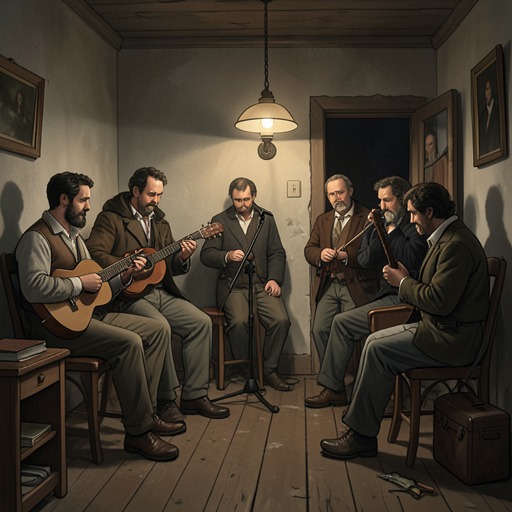
Inside one of the caravans, someone has written “Sartre: Hell is other people” in pen. Someone else has scratched out “other people” and substituted “flutes,” redirecting the maxim from humanity in general to a specific aggravation within the company. The alteration is both a joke and a trace of shared life: it assumes that the reader knows the internal frictions well enough to recognize the target without explanation.
The inscription sits amid a catalogue of the Travelling Symphony’s petty resentments. Rehearsal absences, old disputes, romantic jealousies, and the last of the rosin all become occasions for annoyance. The phrase’s comic narrowing to flutes captures this crowded, permanent company, where musicians cannot simply leave one another behind when irritation rises.
Friction and the Symphony as Home
The joke does not mean that the company is merely a collection of people who dislike one another. Its members also share friendship, camaraderie, music, Shakespeare, and moments of beauty. The narration places the scratched-out maxim beside these counterweights: the Symphony is difficult to live with, yet it is also the members’ only home.
That dependence has particular force in Year Twenty. Small towns have become wary communities shaped by the violence and losses that followed the collapse, and outsiders find it harder to enter them than they did in the pre-pandemic world. Against that landscape, the Travelling Symphony’s internal irritations are the price of belonging to a durable group. “Hell is other people” names the strain of togetherness, while the company’s continued life together shows why that strain is not the whole story.
Kirsten’s Variation
After a rehearsal of A Midsummer Night’s Dream, Kirsten stands by the caravans with her hands pressed to her forehead, trying to will away a headache. When August asks if she is all right, she replies, “Hell is other actors,” then adds, “Also ex-boyfriends.” Her version shifts the maxim from a general complaint about the company’s musicians to the immediate aggravations of the theater and her past relationships.
August answers, “Stick to musicians. I think we’re generally saner.” The exchange keeps the expression playful rather than turning it into a serious declaration of isolation. Kirsten then says she is going for a walk to see if she can find Charlie. Her movement away from the rehearsal does not erase the bonds surrounding her; instead, the joke belongs to a life in which actors, musicians, former partners, and friends remain close enough to irritate one another—and to be sought out.